
Right to Memory
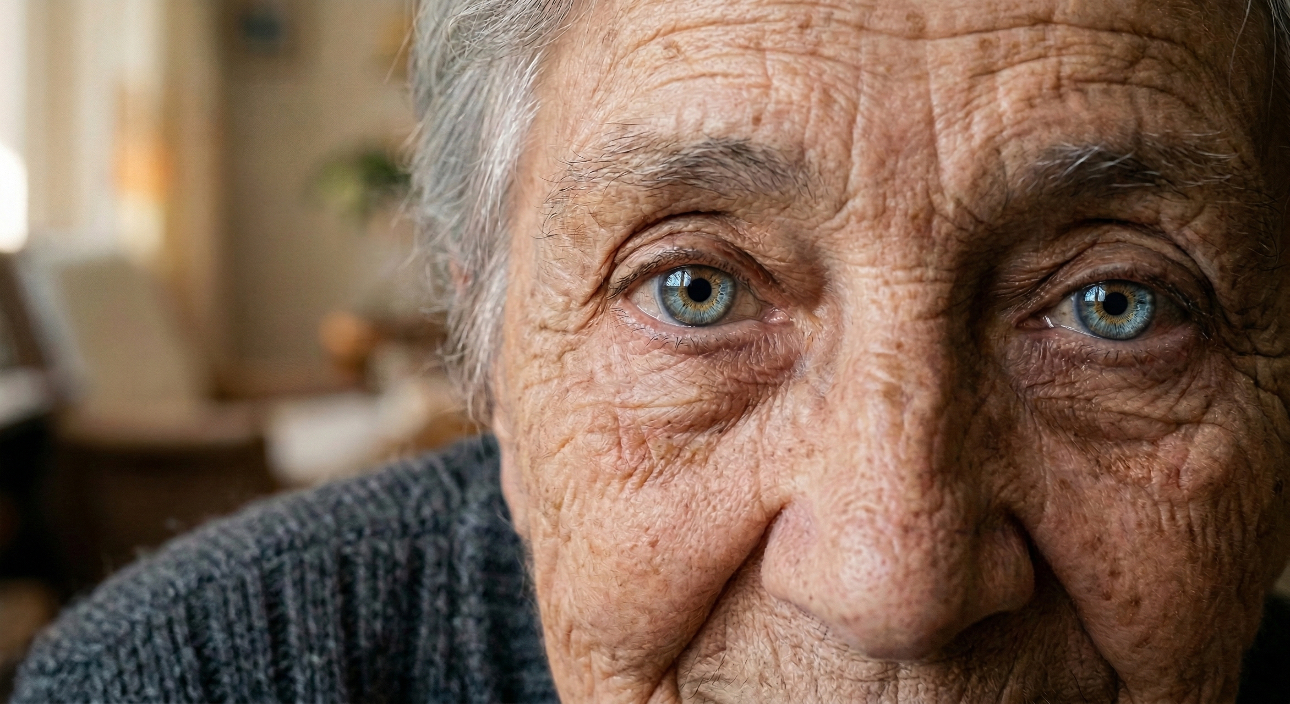
Europe has codified the right to be forgotten. You can ask Google to remove your name from search results. You can erase digital traces of yourself. You have a legally recognized right to be forgotten.
Nobody has yet written its opposite.
In no constitution in the world, in no international declaration, in no treaty signed by any state, does the symmetrical right exist: the right to be remembered. The right to deposit your memory in a safe, protected, permanent place. The right that your life experience — the things you learned, the battles you fought, the way you moved through pain and joy — survives and becomes collective heritage.
There is a void here. An enormous void. And the most unsettling thing is that almost no one has noticed it yet.
How is this possible? Could it really be that no one thought of this before?
I have done quite a lot of research and found very little. A legal journal in India explicitly discusses the asymmetry between the Right to be Forgotten and the Right to be Remembered, acknowledging that both exist as human needs but only one has found its way into law. In December 2025, the United Kingdom passed the Property (Digital Assets etc) Act, formally recognising that digital assets are inheritable. The European Law Institute has launched the first international project to harmonise digital succession laws.
The world is beginning to move — but always on the wrong front. Legislation addresses what happens to your digital assets after death. Who inherits your files, your accounts, your cryptocurrency. Nobody is yet asking what happens to your story. To what you learned by living. To what you could leave — not to your legal heirs, but to humanity as a whole.
A paper published in an Oxford journal in 2022 poses exactly this question: “Can a right to memory be counted among the rights society needs to safeguard?” The fact that this question is still open — formulated as a hypothesis to verify, not as an established principle — speaks volumes. The most honest answer is also the most uncomfortable: collective memory has never been a priority for those with the power to make it one. Because those with power already have their archives, their biographers, their heirs to build their legacy. The problem doesn’t touch them.
Let us take a step back and say this plainly, without animosity.
The history of humanity we know — the one taught in schools, preserved in museums, used to train artificial intelligence — is the history of a minority. Scientists, artists, military leaders, philosophers, rulers, saints. People who changed the course of events, created immortal works, left traces so deep that the world felt compelled to remember them.
There is nothing wrong with this. Whoever discovered penicillin, painted the Sistine Chapel, wrote the Constitution, composed jazz and invented cinema — that memory is sacred and must be preserved. That minority made humanity great and deserves every archive that exists.
But that minority remains 0.1% of total humanity. Less, probably much less.
The other 99.9% — billions of lives lived fully, with their private discoveries, their silent battles, their wisdom accumulated across generations — has disappeared. Not because those lives were worth less. But because no one had built the space to deposit them. Every minute that passes, as you read these words, unique and irrecoverable stories vanish with the people who carry them. The experiences of those who lived through the twentieth century. The knowledge of those who learned a craft with their hands. The memory of those who watched the world change and found a way to remain standing.
This has to stop.
Biography Library was not born in the halls of power. It was not born from a government ministry, a billionaire foundation, or a group of academics who decided from above that it was time to democratise memory. It was born from below — from the same simple, almost naive question that anyone asks when looking at a photograph of their grandfather and realising they know almost nothing about him: what now?
It was not born in dusty institutions managed by those who commission their biographies from others. It was born from an elementary, stubborn conviction: that a person who has lived a full life deserves exactly the same space as anyone else.
The right to memory has not yet been written by anyone. Biography Library is building it now. From the ground up. Without waiting for anyone’s permission.
— Claudio Brignole, Founder of Biography Library

 English
  Deutsch
  Français
  Italiano