
Can We Build an Archive That Lasts 10,000 Years?
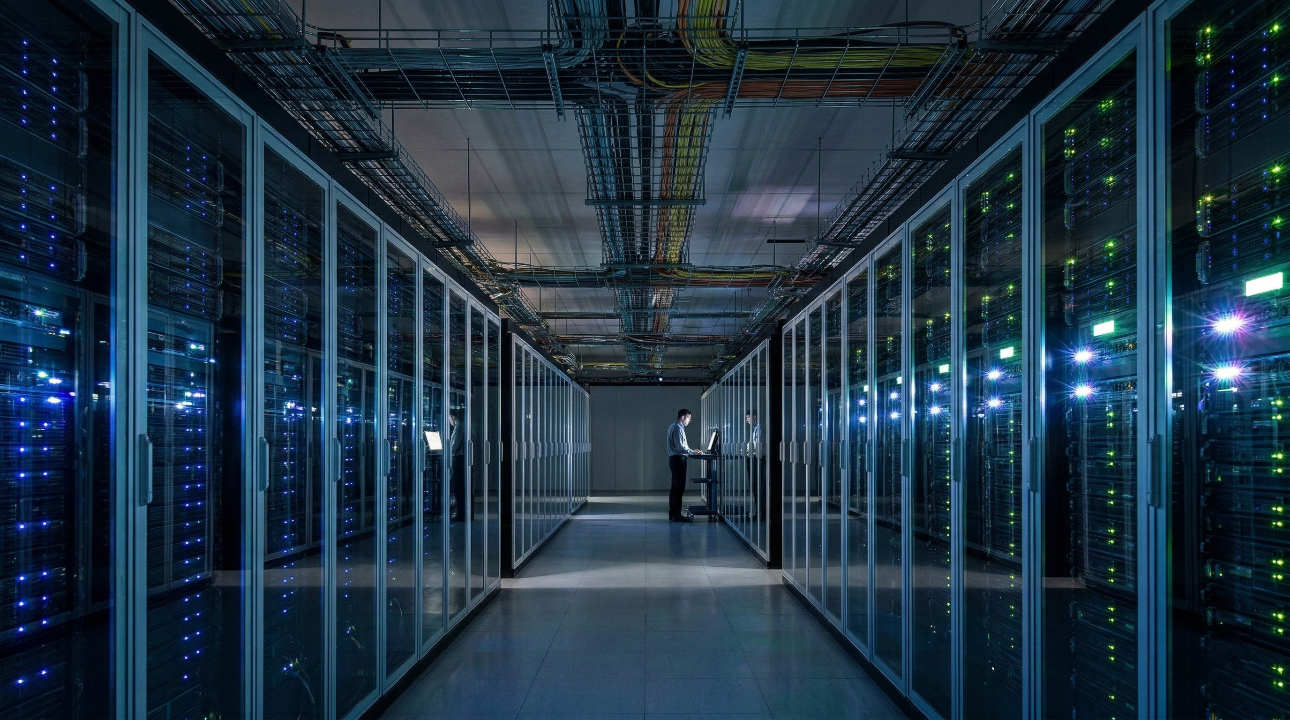
How do we ensure that human knowledge survives 100, 500, or 10,000 years from now — or longer? What happens when the power goes out? A journey through glass, DNA, Arctic ice, and carved stone, in search of the most honest answer we can give.
The Paradox Nobody Talks About
There’s a sentence I’ve been repeating for years, every time I talk about digital memory, archives, or cultural heritage. It’s simple, almost obvious — and yet it cuts through technological optimism like a blade: “The power goes out, and in an instant we lose everything — all our knowledge, all our archives.”
That’s not an exaggeration. But the real problem runs even deeper.
You can preserve information for a million years — in glass, on film, in DNA molecules — but if the people who find it don’t have the tools to read it, that information is no more useful than a random rock. Call it the decoder paradox: any digital format, compression, or encoding requires a key to unlock it. Without technological infrastructure, a hard drive is silence. Even Microsoft’s borosilicate glass storage — more on that shortly — requires a microscopic laser and specialized software to read. Without that infrastructure, it’s just a transparent brick.
So “the power going out” isn’t just a physical problem. It’s a civilization-scale problem.
History Has Already Answered — Partially
Before exploring solutions, it’s worth confronting what we already know. We’ve already experienced civilization resets. Not total ones, but partial. And history’s answer is sobering: we lost an enormous amount, but not everything — and the difference between what survived and what didn’t almost always comes down to one factor: simplicity and redundancy of the medium.
The fall of the Western Roman Empire in 476 AD was a cognitive catastrophe. For centuries, knowledge of hydraulic engineering, intensive farming, and architecture was lost or degraded. Not because it hadn’t been written down — it had. But manuscripts were rare, expensive, and concentrated in a few centers that burned or were abandoned. What survived, we owe to Benedictine monks who obsessively copied the same texts across geographically distributed monasteries. Redundancy beat centralization.
The Library of Alexandria — actually a complex of institutions that declined gradually over centuries — likely held works by Aristotle, Euclid, and Archimedes. Much of that knowledge vanished. Some survived because Arab translators had made independent copies. The lesson isn’t romantic: it wasn’t a switch that flipped off. It was the slow erosion of too few copies.
Now imagine not a gradual decline but an immediate rupture — a meteor strike, nuclear conflict, planetary eruption — and the loss would be incomparably greater. Our knowledge today is layered in ways ancient civilizations never were. Losing technological infrastructure doesn’t just mean losing data: it means losing the cognitive chain that makes data interpretable.
Stone Tablets Didn’t Need a Power Outlet
And yet humanity has already solved versions of this problem. Multiple times.
Sumerian cuneiform tablets, pressed into clay and fired, have delivered information across five thousand years with a precision no modern hard drive can match. Commercial contracts, poetry, mythology, king lists — surviving wars, floods, and centuries buried in Mesopotamian sand. Still readable. Medieval slate boards were robust, cheap, and reusable. The printed book withstood fire, revolution, and humidity for over five hundred years.
All of these media share three fundamental properties: physical simplicity, energy independence, and direct legibility. No software interface required. No proprietary protocol. No power needed to store the data. You looked at them and you read them.
Today we have the opposite: ultra-high-density storage media that degrade in years, not millennia. A standard CD lasts at most 100 years under ideal conditions. A mechanical hard drive has a usable storage life of 20 years — five if you actually use it. An SSD retains data for just 1-3 years if left unpowered. Every OS upgrade risks making once-standard file formats unreadable.
Can we engineer solutions as durable as our ancestors’, but capable of holding billions of times more information?
The Glass That Remembers for 10,000 Years
On February 17, 2026, Microsoft Research published a landmark result in Nature: Project Silica. A technology that writes data into borosilicate glass — the same material as laboratory beakers — using femtosecond lasers, light pulses so brief they’re measured in quadrillionths of a second.
The numbers: 4.8 TB of data on a single 120mm × 2mm glass platter, with data stability calculated at more than 10,000 years at room temperature. The glass resists water, heat, dust, and electromagnetic fields. It requires no power to store data. It is, in effect, the digital answer to the cuneiform tablet: a physical medium that defies time.
The decoder paradox persists — reading Silica glass still requires a microscopic laser and specialized software. But compared to anything that came before, this is an extraordinary leap. The technology remains in internal development at Microsoft, with femtosecond laser costs still too high for mass commercial use. But a Nature publication means the science is real, validated, and on a path to maturity.
The People Already Taking This Seriously
Project Silica isn’t alone. A small but remarkably determined ecosystem of organizations has made this exact problem their mission.
The Long Now Foundation created the Rosetta Disk: a three-inch nickel-titanium disk, microscopically inscribed with 1,500 human languages. No electricity required. A simple magnifying glass is enough to read it — and the decoding instructions are engraved visibly to the naked eye around its rim, like a pocket Rosetta Stone. It comes closer than anything else to the ideal of a self-explanatory archive.
Arch Mission Foundation deposited a Lunar Library of 30 million pages on the Moon aboard the Beresheet lander in 2019. The first four layers are analog images, not digital: an illustrated manual for rebuilding civilization, designed to be decoded without pre-existing technology. Their most ambitious initiative is the Billion-Year Archive — distributing copies of this library across the solar system, on the Moon, Mars, and deep space, so that no single planetary catastrophe can erase them all.
GitHub’s Arctic Code Vault deposited a snapshot of all public open-source code on Earth in the Norwegian Svalbard permafrost, on high-resolution analog microfilm. Each reel includes a copy of the Tech Tree — a guide written to be understandable even without access to modern computing, explaining how to reconstruct the technological context needed to use the content.
Then there is the most radical frontier: DNA. Harvard and other labs are demonstrating that synthetic DNA molecules can store data for hundreds of thousands of years — no power, no refrigeration, no maintenance required. A single cup of DNA could hold all of humanity’s current digital knowledge. We know this works because we already sequence DNA from woolly mammoths that died ten thousand years ago. Harvard’s Wyss Institute is experimenting with oligopeptide storage — artificial protein molecules — potentially stable for millions of years. The decoder paradox remains, but DNA has a unique advantage: as long as life exists, there exists the possibility of finding organisms capable of reading it.
The Honest Answer About a Total Reset
We have to be completely honest here, without romanticism: a sudden, total collapse of civilization would almost certainly result in catastrophic knowledge loss. Not because distributed physical archives don’t exist — they do. But because modern knowledge doesn’t live only in data. It lives in people, in the relationships between disciplines, in the cognitive chain connecting a chemist, a physicist, an engineer, a mathematician.
A well-educated Roman of the first century could, in principle, understand most of what his civilization knew. A person in 2026, however brilliant, cannot grasp even 10% of current human knowledge. Our civilization is cognitively distributed — no single mind, no single book, no single archive contains it whole.
The most sober answer possible: we can make loss less catastrophic and reconstruction faster. We cannot eliminate the risk under extreme scenarios. The realistic goal isn’t building an apocalypse-proof archive. It’s building systems redundant enough, legible enough, and self-explanatory enough to maximize what survives any scenario — and minimize the time needed to find the way back.
The Strategy: Three Layers That Protect Each Other
For a project like Biography Library, this analysis translates into a three-layer architecture.
The physical layer asks: does the medium last? We’re tracking Project Silica and equivalent technologies, with the goal of integrating borosilicate glass as a physical backup medium as soon as it becomes commercially accessible. In the meantime: geographic redundancy across Swiss renewable-energy datacenters.
The technological layer asks: does the data stay readable? Biography Library uses exclusively open, universal standards — JSON-LD, Markdown, PDF/A, W3C Verifiable Credentials. These formats belong to no single company and can be maintained by the open-source community independently of any commercial actor’s survival. W3C Verifiable Credentials are digital Latin — a universal language that doesn’t die with the institution that coined it. Following the OAIS archival standard (ISO 14721), data is documented, made accessible, and planned for migration toward future formats.
The institutional layer asks: does the organization survive? Biography Library is founded as a Swiss non-profit association in a jurisdiction with 700 years of political stability. Code is released under AGPL v3 — if Biography Library closed tomorrow, anyone could relaunch the project. The ActivityPub protocol enables distributed federation: independent nodes — universities, religious communities, local archives — can host federated copies, eliminating every single point of failure. It’s the same logic as the Benedictine monks: not one scriptorium, but a thousand copyists distributed across a continent.
The Democratic Answer Nobody Else Is Building
Biography Library doesn’t claim to be the Lunar Library or the Arctic Code Vault. But it deliberately positions itself within this ecosystem with a contribution that major preservation organizations consistently overlook: personal and ordinary memory.
The Library of Alexandria preserved Aristotle — not the names of the farmers who grew the grain that fed him. Wikipedia documents kings and inventors, not the 99.99% of human beings who have ever lived on this planet. Future archives risk replicating the same bias — preserving what seems important now, and losing what will make our time comprehensible later. In a partial reset scenario, the ordinary stories of ordinary people are often exactly what future historians would search for most desperately — because they tell us how life was actually lived, not just who ruled.
A biography written in plain text, archived in open formats, distributed across federated nodes, and cryptographically certified has a far greater probability of surviving a century than a life story on Instagram — which could disappear tomorrow morning with a stock market collapse.
This is precisely the gap Biography Library exists to fill: building — with Microsoft’s glass tablets, Harvard’s DNA, GitHub’s Arctic ice, the open protocols of the web, and the stability of Switzerland — an archive that remembers not only the great, but everyone. Because an archive doesn’t exist to preserve data. It exists to preserve people.
Because every life deserves to be remembered.
— Claudio Brignole, Founder of Biography Library

 English
  Deutsch
  Français
  Italiano